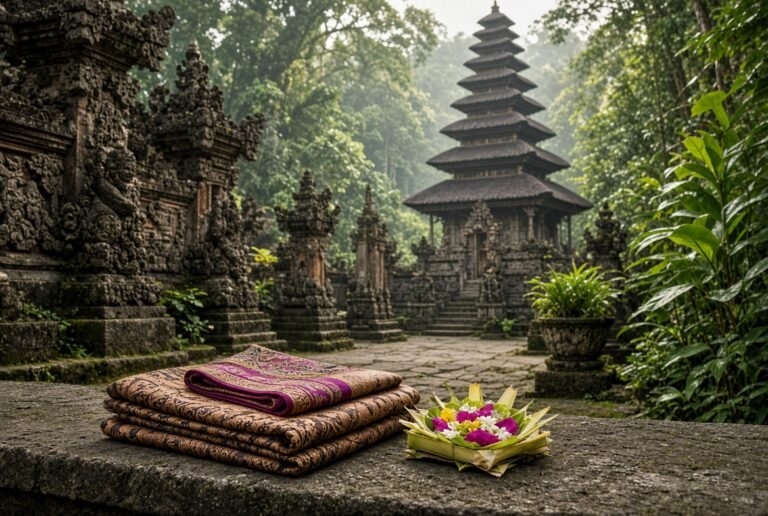
Canang Sari and Daily Offerings: What Visitors Should Understand
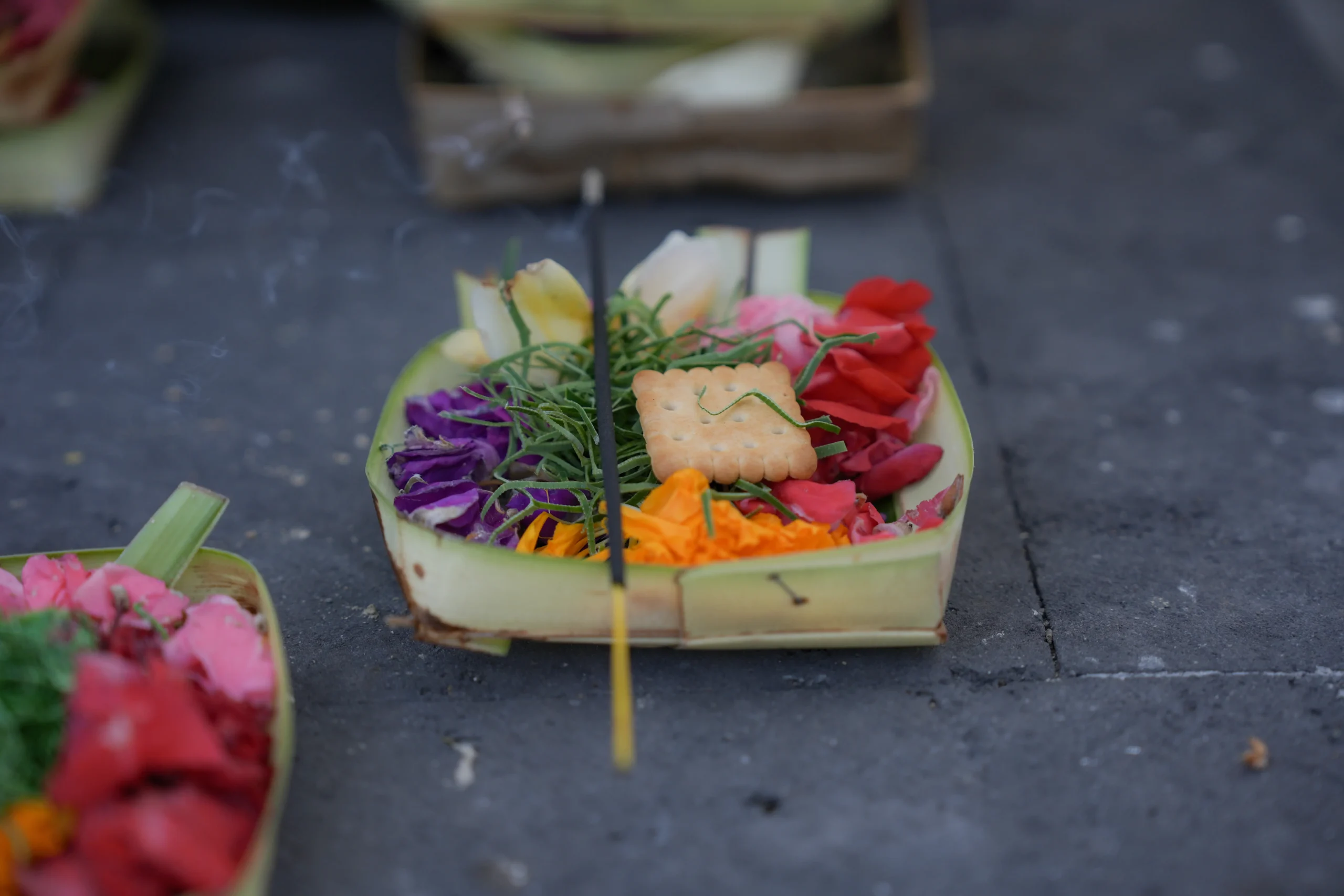
If you spend any time in Bali, you will notice small, colourful offerings placed on sidewalks, in front of shops, at temples, and even on the dashboard of cars. These are called canang sari, and they are an essential part of daily Balinese life.
Understanding their meaning helps you move through the island with greater awareness and respect.
What Is Canang Sari?
Canang sari is a small, handmade offering usually made from palm or banana leaves and filled with flowers, rice, and sometimes a small amount of food or incense.
The word “canang” refers to the square-shaped basket, and “sari” means essence. Together they represent a daily gift of gratitude to the gods.
Why Are Offerings Made Every Day?
Balinese Hindus make offerings as a way to:
- Give thanks
- Maintain balance between the positive and negative forces in the world
- Show devotion in everyday life
Offerings are made in the morning and sometimes again in the afternoon or evening. You will see them outside homes, businesses, temples, and along walking paths.
Different Types of Offerings
While canang sari is the most common, you may also notice larger or more elaborate offerings during ceremonies and temple festivals. These can include fruit, rice cakes, and decorative elements.
The small daily canang sari is the one visitors encounter most often.
How Visitors Should Treat Offerings
The most important rule is simple: try not to step on them.
Other respectful practices include:
- Walking around offerings when possible
- Avoiding moving or touching them
- Not placing personal items on top of them
If you accidentally step on one, do not worry excessively: it happens. Simply continue on your way. Intention matters more than perfection.
Offerings and Your Daily Travels
When you travel with a private driver, you will often see offerings placed on the dashboard of the car as well. This is a common way for drivers to ask for safety on the road.
Your driver can also help explain offerings you see at temples or along the route if you are curious.
Why This Matters for Visitors
Understanding canang sari turns something that might look like litter into a meaningful cultural practice. It also helps you move more mindfully through streets, temple grounds, and villages.
Bali’s daily offerings are one of the most visible expressions of the island’s living spiritual culture. Noticing them with respect adds depth to your experience.
Frequently asked
What do the flowers in canang sari represent?
Different coloured flowers are placed in specific directions and carry symbolic meaning related to different gods and aspects of balance.
Why are offerings placed on the ground?
They are offered to both the higher spirits and the spirits of the earth. Placing them on the ground is part of the ritual.
Is it okay to take a photo of canang sari?
Yes, photography is generally fine. Just avoid disturbing the offering itself.
What should I do if I accidentally step on an offering?
Simply continue walking. It is not considered a serious offence, especially when done accidentally.
Do I need to make offerings as a visitor?
No. Offerings are part of Balinese Hindu practice. Visitors are only expected to treat them respectfully.