Visiting Balinese Temples: What to Wear and How to Behave
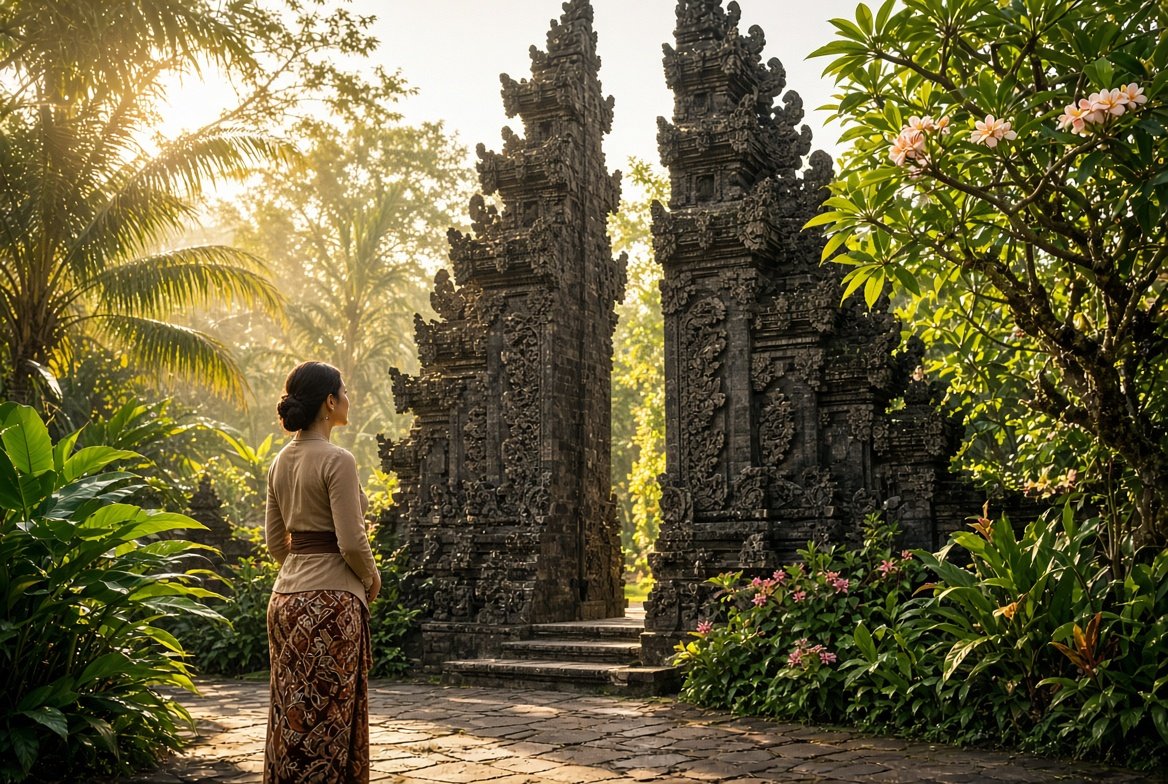
Visiting Balinese temples is one of the most meaningful parts of a trip to Bali. These sacred places are still actively used for prayer and ceremony, so knowing what to wear and how to behave helps you show respect while still enjoying the experience.
This guide covers the essential rules in clear, practical language.
What to Wear When Visiting Balinese Temples
The basic dress code is simple and consistent across most temples:
- Shoulders must be covered
- Knees must be covered
- Clothing should be modest and neat
For both men and women:
- A sarong (or long trousers/skirt) that covers the knees
- A sash tied around the waist (usually provided at the entrance)
- A shirt or top that covers the shoulders
Many temples provide sarongs and sashes at the entrance for a small rental fee or donation. However, bringing your own lightweight sarong is more comfortable and hygienic, especially if you plan to visit several temples in one day.
What to avoid:
- Shorts above the knee
- Sleeveless tops or tank tops
- Very tight or revealing clothing
- Beachwear
If you are travelling with a private driver, they can usually remind you about dress requirements before you arrive and often carry spare sarongs if needed.
How to Behave Inside Balinese Temples
Temples are places of worship. A calm and respectful attitude is appreciated.
Key points to remember:
- Speak quietly
- Walk slowly and mindfully
- Do not climb on structures or sacred statues
- Never point your feet toward the shrine or priest
- Do not enter restricted areas (these are usually clearly marked or indicated by staff)
If a ceremony is taking place, it is best to observe from a respectful distance unless you are invited closer.
Special Situations
Women who are menstruating
In Balinese tradition, women who are menstruating are asked not to enter temple grounds. This is a cultural and religious rule that is still observed at most temples.
Photography
Photography is usually allowed in public areas of the temple, but always be discreet. Avoid photographing people praying at close range without permission, and never use flash during ceremonies.
Practical Tips for a Smooth Visit
- Visit earlier in the morning or later in the afternoon to avoid the strongest heat and largest crowds
- Bring a light scarf or sarong in your day bag
- Remove shoes when required (some inner courtyards ask visitors to do so)
- Follow any instructions given by temple staff or your driver
A good private driver will usually know the best timing for popular temples and can help you prepare before you arrive.
Final Thought
Respectful dress and behaviour allow you to experience Balinese temples as living sacred spaces rather than just tourist attractions. When you follow these simple guidelines, you will generally be welcomed warmly.
Frequently asked
Do I need to pay to enter a temple?
Some temples have a small entrance contribution. Your chauffeur can confirm the latest local guidance.
Can children visit temples?
Yes. Keep them close, dress respectfully and explain the quiet moments before entering.
Is it acceptable to take photos?
Yes in most public areas, but always be respectful. Avoid photographing people during prayer and never use flash during ceremonies.
Do I really need a sarong to enter a Balinese temple?
Yes. Covering the knees and shoulders is required at almost all temples. Sarongs and sashes are usually available at the entrance if you do not bring your own.
What should I do if I am not dressed correctly when I arrive?
Most temples offer sarongs and sashes for rent or loan near the entrance. Your driver can also assist if needed.
Are the rules the same at every temple?
The basic rules (covered shoulders and knees) are consistent. Some larger or more sacred temples may have additional restrictions.